
Inside Korea’s seasonal coffee stamp collecting culture that has nothing to do with the global Starbucks Rewards program
December in Seoul: It’s Frequency Season
Walk into any Starbucks in Korea during late autumn or early summer, and you’ll notice something peculiar: people checking a grid of green coffee cups on their phone screens. They’re not scrolling social media – they’re tracking their Frequency progress. Welcome to one of Korea’s most distinctive consumer rituals.
If you’ve only experienced Starbucks in the US, UK, or most other countries, this will sound unfamiliar. But in Korea, Starbucks runs a completely different loyalty system that has become a seasonal cultural marker.
What is “Frequency”? (And Why It’s Not Starbucks Rewards)
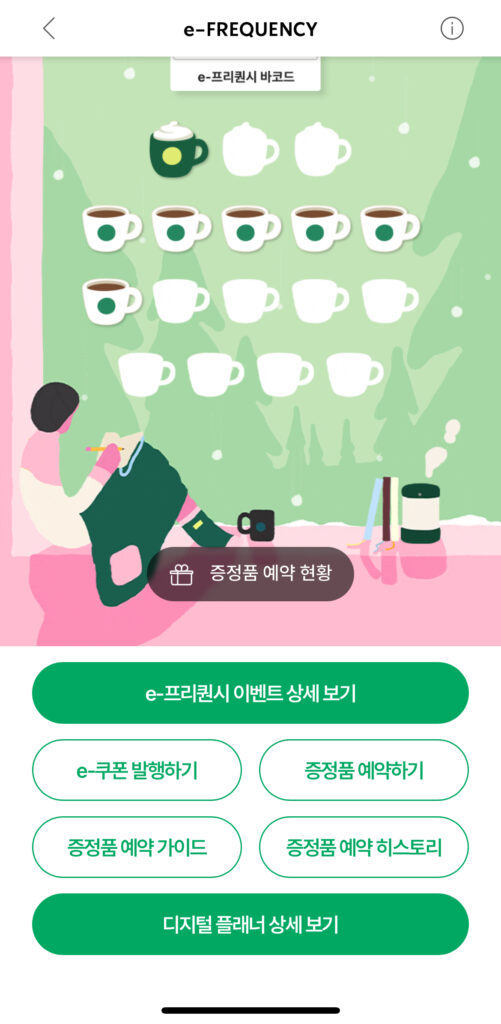
Since 2013, Starbucks Korea has run a seasonal loyalty program called “e-Frequency.” Twice a year – winter and summer – customers can collect exactly 17 digital stamps by purchasing beverages. Complete the mission, and you get premium merchandise: designer blankets, Moleskine planners, humidifiers, or limited-edition portable lamps.
How it actually works:
- Buy 17 beverages in ~2 months (including 3 specific “mission drinks”)
- Watch your app fill up with virtual coffee cup stamps
- Reserve your gift when all 17 are collected
- Miss the season? You’ll have to wait until next time
Compare this to what you’re used to:
Rest of the World: Starbucks Rewards
- Earn points (Stars) gradually with every purchase
- Redeem anytime for various rewards
- No time pressure
- Continuous, individual rewards
Korea: Frequency
- Fixed goal: 17 drinks, no more, no less
- Limited time window (about 60 days)
- One big reward at the end
- Seasonal event-driven
- Premium collaborations (MSGM, Moleskine, Bonaccia)
It’s not just different – it’s opposite. Western Starbucks says “earn rewards your way, at your pace.” Korean Frequency says “everyone participate together during this season.”
The Psychology: Why This Format Resonates in Korea
1. Limited Edition Culture
Korea has a unique relationship with “limited edition” marketing. The phrases “기간 한정” (gigan hanjung – limited time) and “수량 한정” (suryang hanjung – limited quantity) are particularly effective here. Frequency combines both: limited time window + limited stock merchandise.
Miss winter 2024’s planner? You can’t just buy it in spring. It’s gone until next year’s event. This seasonal exclusivity is a familiar pattern in Korean consumer culture.
2. Seasonal Rituals
Koreans mark seasons through commercial events as much as weather. Cherry blossoms in spring, Frequency in summer, Chuseok gift sets in autumn, Frequency again in winter. The retail calendar becomes part of the cultural calendar.
Starting your Frequency collection has become a seasonal marker – like the first snow or the first cherry blossoms.
3. Collective Participation
While it’s an individual purchase, the experience feels communal. Office workers compare their stamp progress. Friends gift each other stamps they can’t complete. Online communities share “minimum cost strategies” (pro tip: order the cheapest espresso 14 times for about $50 total).
Individual consumption, shared experience – a very Korean approach.
The Evolution: From Frenzy to Tradition
While Frequency created significant buzz in its early years – with some items causing morning app rushes and long waiting lists – the phenomenon has evolved. Not everyone participates as intensely now, but it remains a distinctive seasonal tradition that sets Korean Starbucks apart from its global counterparts.
The 2020 incident where a customer ordered 300 beverages and left 299 behind sparked important conversations about consumption. Today, most participants are regular coffee drinkers who enjoy the seasonal bonus rather than changing their habits dramatically for merchandise.
Secondary markets on apps like Karrot Market still exist, where people trade stamps or sell merchandise, showing that the system has found its equilibrium in Korean consumer culture.
Regional Bears: Korea-Exclusive Designs
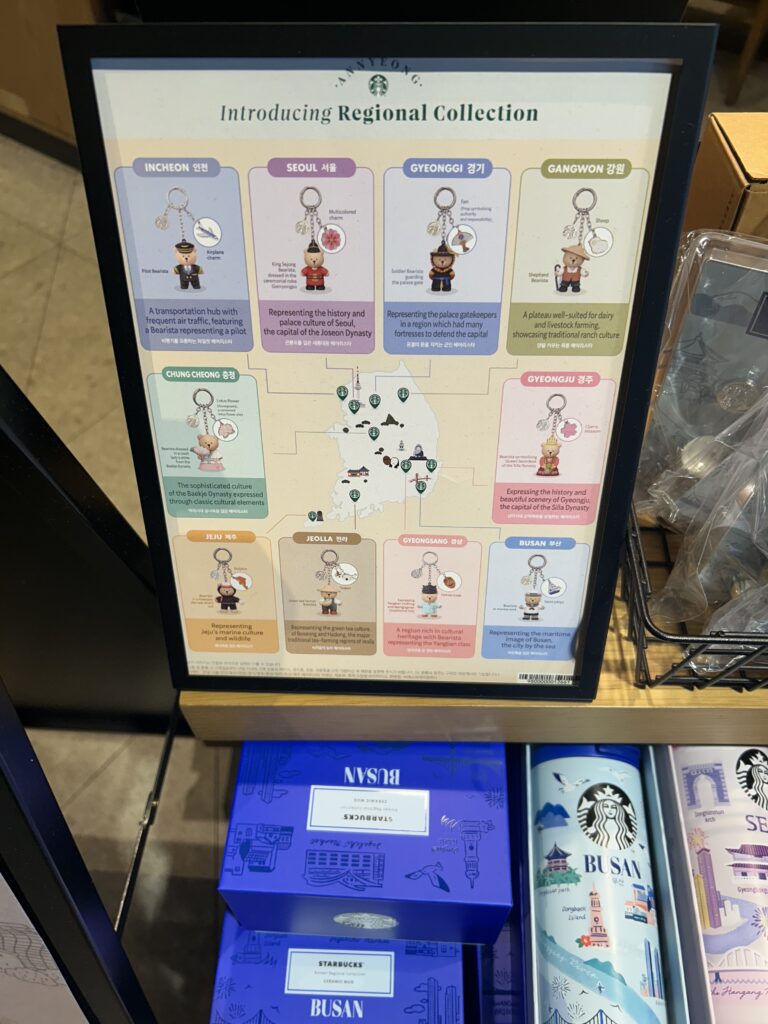
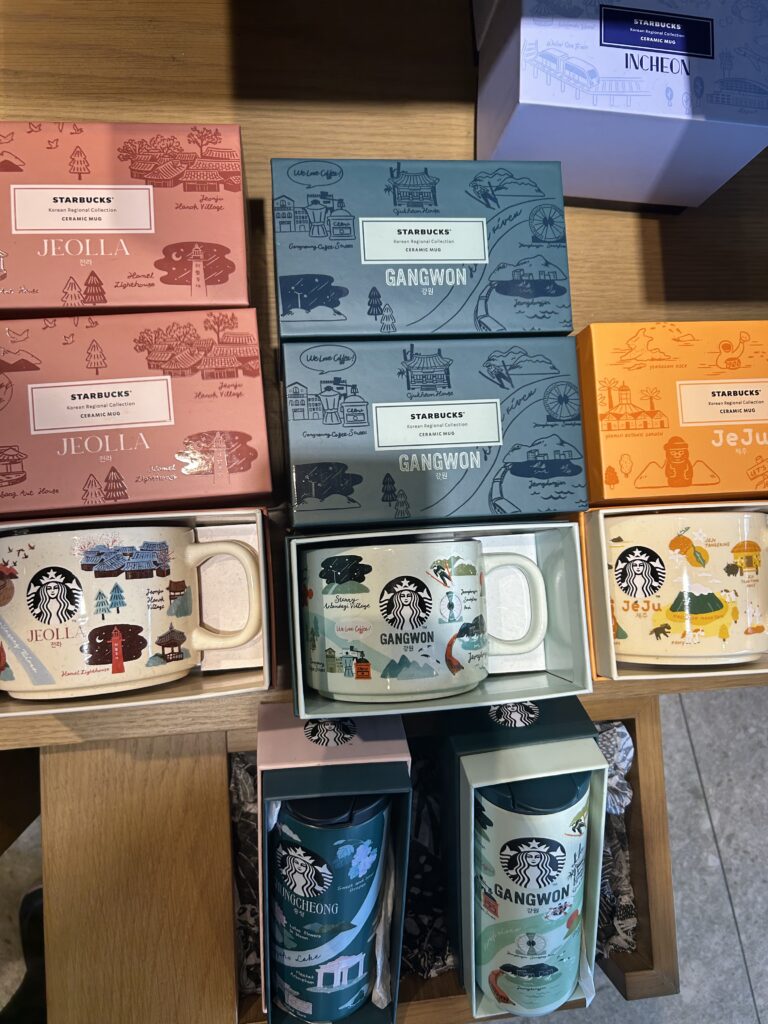
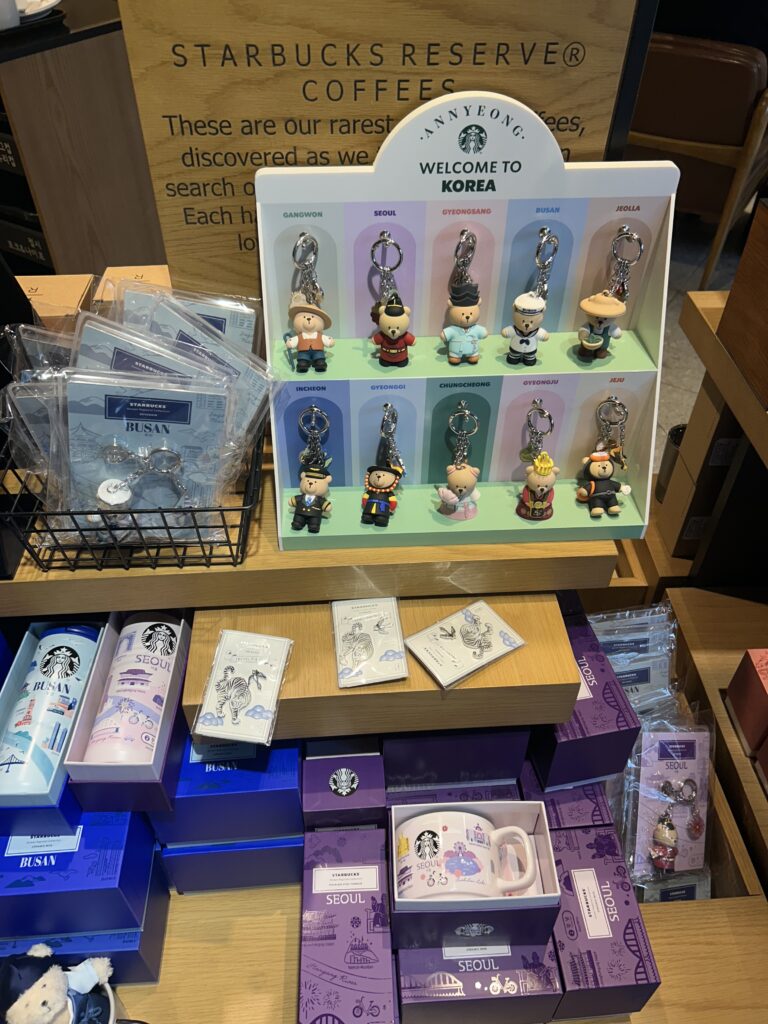
During certain periods, Starbucks Korea offers “Regional Collection” items featuring adorable bear characters representing different Korean cities – Seoul Bear in hanbok, Busan Bear with a sailor cap, Jeju Bear with tangerines.
These region-specific items are basically non-existent in other countries’ Starbucks stores, making them popular souvenirs for international visitors looking for uniquely Korean merchandise.
What This Reveals About Korean Consumer Culture
Frequency isn’t just a marketing program – it’s a lens into Korean consumption patterns:
Designer Collaborations Matter
It’s not just “buy coffee, get a mug.” It’s “buy coffee, get MSGM design” or “buy coffee, get Moleskine quality.” Elevating everyday purchases through prestige partnerships is distinctly Korean.
Physical Goods in a Digital Age
Despite being one of the world’s most digitally advanced societies, Koreans still value physical planners. In the age of Google Calendar, thousands still seek out tangible paper diaries. There’s something about material objects that digital natives still appreciate.
Event-Driven Shopping
Everything becomes an event. Not just buying coffee, but participating in a seasonal moment. Koreans don’t just shop – they participate in cultural rituals, even commercial ones.
Can Visitors Experience This Culture?
The Realistic Approach: You probably won’t complete 17 drinks during a short visit – but you can still engage with the culture.
If you want Starbucks merchandise as a Korean souvenir, you can buy the regional collection items directly without stamp collecting. These Korea-exclusive products – like the adorable Bearista (bear barista) keychains representing different Korean cities – are available for purchase year-round.
Where to find them:
- Starbucks Reserve locations in Seoul (Gwanghwamun, Jongno, Gangnam)
- Larger Starbucks stores in tourist areas
- Airport Starbucks locations
You’ll find items you won’t see in any other Starbucks worldwide – from Seoul’s hanbok-wearing bears to Jeju’s tangerine-themed designs. They’re small, affordable (around $6-9 USD), and capture this uniquely Korean coffee culture.
Best timing: Visit during Frequency season (late May-July or late October-December) to observe the phenomenon in action, even if you’re just buying merchandise.
The Bigger Picture
Is Frequency marketing? Absolutely.
Is it also a cultural phenomenon that reveals how global brands localize? Undeniably.
For visitors to Korea, observing Frequency offers insight into how international companies adapt to local consumer preferences. Starbucks isn’t just operating in Korea – it has become part of Korean seasonal culture, creating rituals that feel essential to the rhythm of the year.
So next time you’re in Seoul during Frequency season and see someone checking a grid of coffee cups on their phone, you’ll know: they’re not playing a game. They’re participating in a seasonal tradition that exists nowhere else in the Starbucks world.
#KoreanCulture #StarbucksKorea #FrequencyChallenge #SeoulLife #KoreanConsumerism #TravelKorea #CoffeeCulture #LimitedEdition #KoreanTraditions #ModernKorea #CulturalInsights #SeasonalRituals #KoreanLifestyle #VisitSeoul #KoreaTravel
답글 남기기